Visiting a new restaurant, coffee shop, or attraction should feel exciting—not stressful. If you partner with a service dog, understanding your rights and responsibilities can make every outing smoother and more empowering. This guide will help you navigate public spaces with clarity and confidence.
What Is a Service Dog?
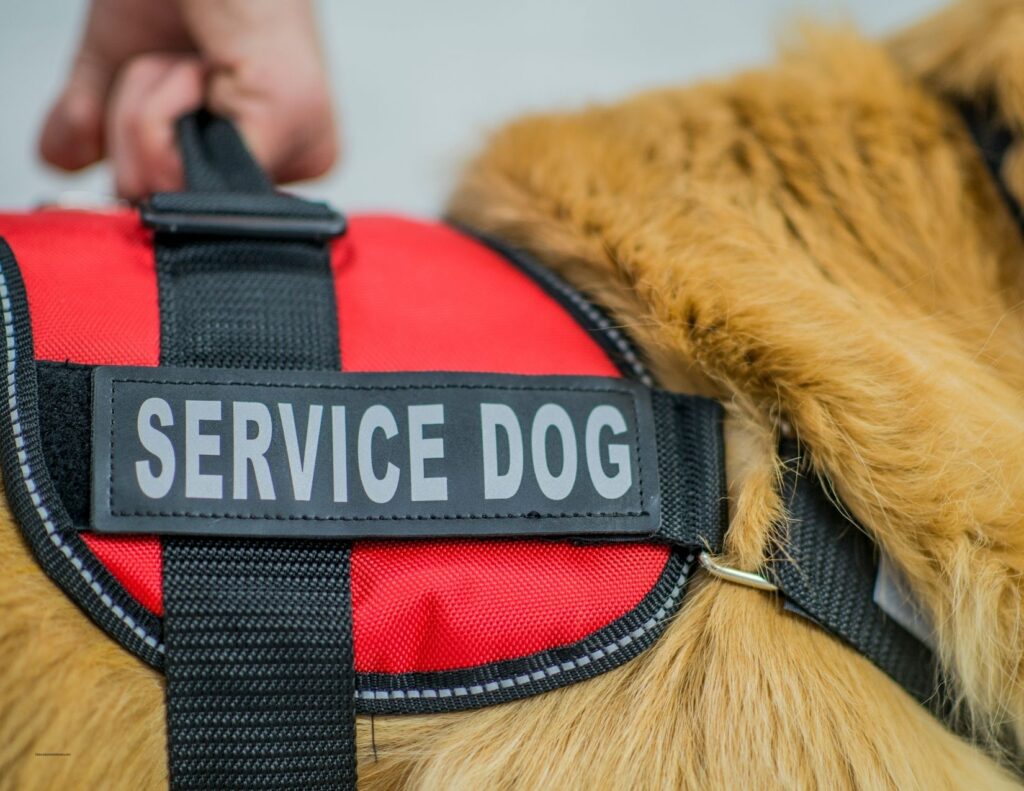
A service dog is individually trained to perform specific tasks that assist a person with a disability. These tasks might include guiding someone who is blind, alerting to seizures, assisting with balance and mobility, retrieving items, or interrupting medical episodes.
Under the Americans with Disabilities Act (ADA), service dogs are allowed in most public places—including restaurants, bars, coffee shops, retail stores, and attractions—where the public is permitted.
Service dogs are working partners. Their presence supports independence, safety, and full participation in community life.
Your Rights as a Handler
In public spaces, businesses may ask only two questions:
-
- Is the dog required because of a disability?
- What work or task has the dog been trained to perform?
They cannot:
-
- Ask about your diagnosis
- Request documentation or certification
- Require the dog to wear a vest
Service dogs are allowed in dining areas, including restaurants and cafés listed on accessibility directories like Accessible Towns.
Your Responsibilities as a Handler
While rights are protected, responsibilities matter too:
-
- Your dog must be under control at all times (leash, harness, or voice control).
- The dog must be house-trained.
- Disruptive behavior (barking repeatedly, aggression) can result in being asked to remove the dog.
A well-trained service dog and a confident handler help strengthen positive community experiences for everyone.
Practical Tips for Visiting New Establishments
Before You Go
-
- Check accessibility directories like Accessible Towns for entrance details, seating layout, and restroom access.
- Call ahead if you want reassurance or to clarify seating space.
When You Arrive
-
- Choose seating that provides space for your dog to settle comfortably.
- Position your dog safely away from walkways where possible, or when it does not impede the task your dog is there to perform for you.
If Questions Arise
Stay calm and clear. A simple, confident response often resolves confusion quickly.
Common Misconceptions
Myth: Service dogs need certification papers.
Truth: No official registry exists under federal law.
Myth: Businesses can deny entry if someone has allergies.
Truth: Both individuals must be reasonably accommodated.
Myth: Only large breeds can be service dogs.
Truth: Size does not determine ability.
Building Community Confidence
When businesses understand the law and handlers feel empowered, everyone benefits. If you have a positive or challenging experience at a restaurant or attraction, consider sharing it on Accessible Towns. Your voice helps others plan with confidence—and encourages businesses to do better. You can share that at https://accessibletowns.com/contact-2/ .